


Land Systems at the Heart of IMF’s 2025 Economic Outlook Amidst Call for "Transformative Investment"

WASHINGTON — International Monetary Fund (IMF) Managing Director Kristalina Georgieva on Wednesday called for “transformative investment” to drive inclusive growth and resilience amid a volatile global economy, in remarks that set the tone for next week’s IMF–World Bank Annual Meetings from Oct. 13–18.

While Georgieva’s address focused on the state of global economic resilience and the policy shifts needed to sustain growth amid rising uncertainty, geopolitical fragmentation, and demographic and technological change, the implications for land and property systems are profound.
Analysts say the Fund’s renewed emphasis on productivity, digital transformation, and social inclusion points to a widening recognition of how land governance underpins economic resilience, food security, and equitable growth.
“We need investment that transforms lives — investment that is green, digital, and inclusive,” Georgieva said. “Countries cannot afford to delay reforms that boost productivity and resilience.”
Economic Crossroads: Investment, Productivity, and Land
Georgieva’s call for “transformative” and “productive” investment comes at a moment when land-related constraints are increasingly seen as a brake on development. According to the World Bank, up to 70% of the world’s land remains undocumented, undermining productivity, tenure security, and investment confidence.
Dr. Jamal Browne, CEO of the Land and Property Network Global (LPN Global), said the IMF’s framing highlights how “land administration is an enabling system — the infrastructure behind investment. Countries looking to boost agricultural productivity, affordable housing, or digital public services cannot do so effectively without first fixing their land governance frameworks.”
This linkage is already visible in several IMF-supported reform programmes, including in Rwanda, Vietnam, and Uzbekistan, where digitisation of land registries has been tied to fiscal transparency and rural development goals.
Digital Transformation and Land Administration
A notable theme in Georgieva’s remarks was the role of technology in modernising public systems. “Digital public infrastructure can turbocharge inclusion and growth if designed well,” she said, referencing India’s digital identity and payment platforms as examples of scalable reform.
For the land sector, experts say this underscores a broader trend, where governments are increasingly integrating land records, property valuation, and spatial data into national digital strategies. The European Union’s “Digital Twin” initiatives and Africa’s expanding fit-for-purpose land mapping projects exemplify this shift.
Dr. Browne noted that “digitalisation is no longer peripheral. When the IMF talks about ‘productive investment,’ the integration of digital cadastres and planning systems is central to that productivity story.”
According to the UN Food and Agriculture Organization (FAO), digital land administration systems can reduce corruption, improve service delivery, and unlock credit access by formalising property rights. These advances, experts say, align with the IMF’s new emphasis on efficiency and fiscal sustainability.
Experts note that the IMF’s focus on “productive investment” highlights the growing importance of digital land administration systems — including cadastres and planning platforms — in boosting economic productivity and governance efficiency.
Climate Resilience and the Land–Finance Nexus
Georgieva previously warned that the climate crisis “threatens to undo decades of progress” unless financial systems shift to support adaptation and mitigation. She has consistently urged member states to accelerate implementation of the Resilience and Sustainability Trust (RST), which provides concessional financing to countries facing climate vulnerabilities.
Land management and climate finance are increasingly intertwined. Degraded soils, insecure tenure, and poor urban planning intensify disaster risk — particularly in the Global South.
According to the Global Land Outlook (UNCCD, 2022), more than 40% of the planet’s land is degraded, with economic losses exceeding $6 trillion annually. Secure tenure, equitable land distribution, and land restoration are therefore pivotal to achieving the IMF’s stated priorities: growth, stability, and resilience.
Several IMF programmes, including in Sub-Saharan Africa and the Caribbean, already incorporate climate-linked fiscal reforms tied to sustainable land use and disaster risk reduction. These efforts are expected to expand as the Fund deepens collaboration with the World Bank and regional development banks on climate-related financing.
Urban Growth, Housing, and Social Cohesion
Georgieva highlighted the need for “inclusive investment,” noting that social and economic opportunity must extend to younger generations. Access to land and housing lies at the heart of this challenge. In many developing regions, youth face structural barriers to acquiring secure plots, accessing credit, or entering formal housing markets. In advanced economies, rising property prices have similarly limited home ownership.
Dr. Browne said, “Secure land tenure underpins everything from mortgage markets to municipal revenue. The IMF’s language on inclusion implicitly recognises that equitable access to land and housing is a macroeconomic issue, not just a social one.”

The commentary aligns with growing evidence that tenure security and affordable housing are critical to intergenerational mobility, economic participation, and social stability.
Youth, Employment, and the Intergenerational Lens
Georgieva’s speech also underscored the importance of “investing in people,” particularly through education and skills. In many developing regions, however, youth unemployment is closely tied to land access and tenure security.
According to the International Labour Organization (ILO), agriculture remains the largest employer of young people in Africa and Asia, yet limited access to land constrains productivity and drives migration. Land reforms that enhance youth access to farmland or credit are therefore crucial to achieving the IMF’s goal of “sustained, inclusive growth.”
In post-conflict and fragile settings, equitable land access also supports peace and stability — another theme Georgieva touched upon. “Social cohesion is both a moral and economic imperative,” she said, a point echoed in ongoing IMF–UN initiatives linking peace-building, governance, and economic recovery.
Bridging Fiscal Reform and Local Governance
Georgieva’s emphasis on “sound fiscal frameworks” also resonates with the land sector’s role in broadening domestic revenue. Property taxation — a core component of municipal finance — remains one of the most underutilised fiscal tools in low-income countries. The IMF has long advocated for better land and property valuation systems as part of fiscal reform agendas.
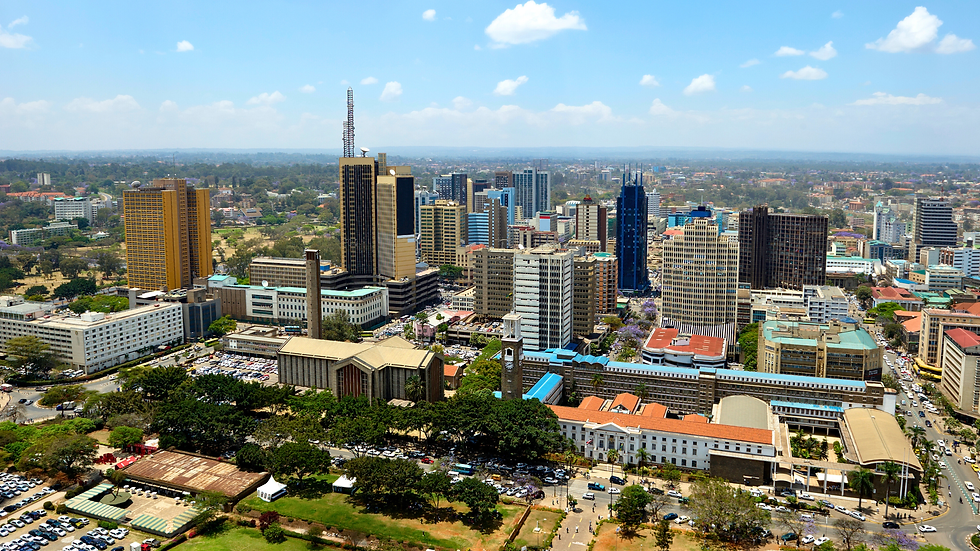
Recent pilots in Kenya, Colombia, and Indonesia have shown how improved cadastres can expand tax bases, strengthen local governance, and improve service delivery. The Fund is expected to highlight such examples during next week’s meetings as part of its discussion on sustainable domestic resource mobilisation.
Looking Ahead: Land at the Heart of the Global Development Debate
The IMF’s 2025 Annual Meetings will convene finance ministers, central bankers, and development leaders to discuss strategies for restoring confidence and reviving growth amidst growing uncertainty and volatility.” While land issues may not headline the official agenda, their role in enabling fiscal stability, digital governance, and inclusive growth is clear.
"The Managing Director's speech at the Milken Institute today, signals a broader recognition that land systems are foundational to resilient, productive economies," Browne said. "I truly expect tenure security, transparent land markets, and modernised land administration systems to form a key part of growth strategies going forward, as policymakers are beginning to see how this helps to translate macroeconomic resilience into tangible social outcomes."
As the meetings approach, stakeholders in finance and land governance will watch closely for signals that the IMF and World Bank are mainstreaming land-linked solutions in global development frameworks.


Comments